What a comb really costs to make in China: ¥0.42 at the stall, $14.99 on Amazon
The question we get asked most about this category is not who makes combs in China. It is: the quote looks fine, so why is everyone else's a different number?
The short answer is in the numbers. A plastic comb leaves a Yiwu stall at ¥0.42, and the same category of comb sells on Amazon for $6.10, $8 or $14.99. A custom order starts at 1,000 pieces per design, new tooling runs from about US$4,200, and moving from 1,000 to 5,000 pieces cuts the unit price by roughly 10%. So the one-off costs decide whether a project works, not the unit price.
Everything below carries a source. Where we could not open the underlying page, it says so.
The price ladder, in one table
These are published prices, not quotes we obtained. They are useful precisely because they are public: any figure a factory gives you can be placed against them.
Two things sit inside that table. First, the Yiwu listing states plainly that the price excludes invoicing, so ask for an invoice and the number moves. Second, the gap between ¥0.42 plastic and ¥17.88–53.76 horn is not process, it is material.
One more thing about that table, because it is the part buyers get judged for. Nobody picks the cheap quote because they are careless. In this category the cheap quote is often the only one that fits a first order: the same comb is ¥0.42 from a stall and several dollars from a factory willing to open a mould for you. The cheap end is real. It is just a different product, a different order size, and a different amount of risk.
What an OEM quote is actually made of
A Guangdong OEM publishes its own production parameters, and they describe the shape of every custom comb quote:
The source says it directly: buyers who compare only the per-unit price misjudge the whole project, because tooling and sampling are charged once while the unit price falls with volume.
Why two combs that look identical quote 30 times apart
Material, mostly. And where the material comes from.
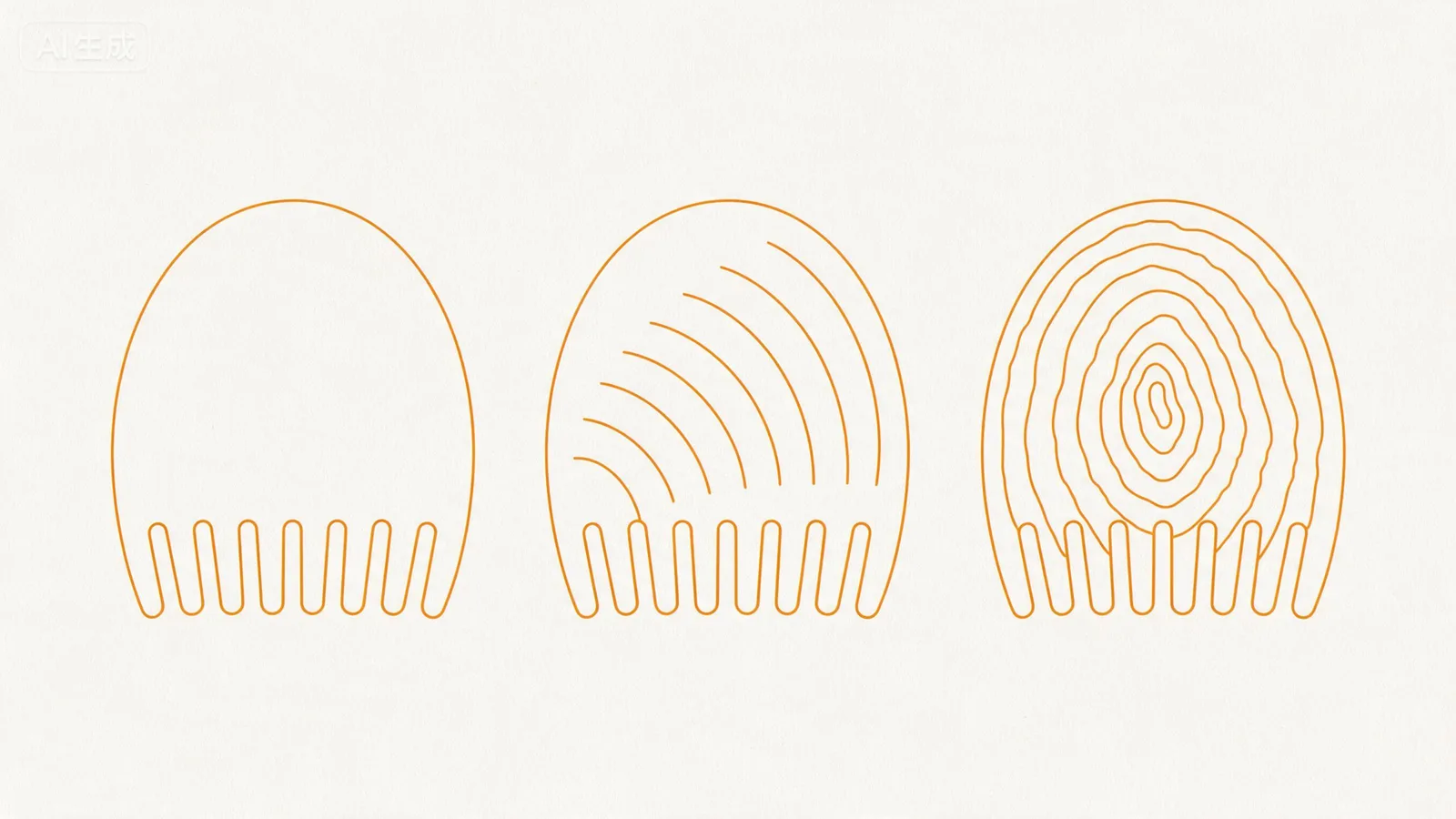
A boar-bristle brush is not a plastics purchase at all: natural boar bristle quotes at US$0.10–0.99 with a 500 kg minimum, and the largest supplier of it is in India, not China. Sandalwood is the sharper example. Commercial black sandalwood timber runs about ¥10,000–12,000 per tonne, common substitute species about ¥3,500, and low-end imitations ¥800–1,200. Two combs labelled the same word can differ 3–30× in wood cost before anyone touches a machine.
Where these factories actually are
Yiwu International Trade City, District 4, second floor, is a street of comb and mirror stalls selling into Europe, Russia and Central Asia — that is where the ¥0.42 lives. Ningbo makes the plastic brushes. Yangzhou makes hotel and travel combs, and also pet combs (US$0.53–0.70, MOQ 1,200).
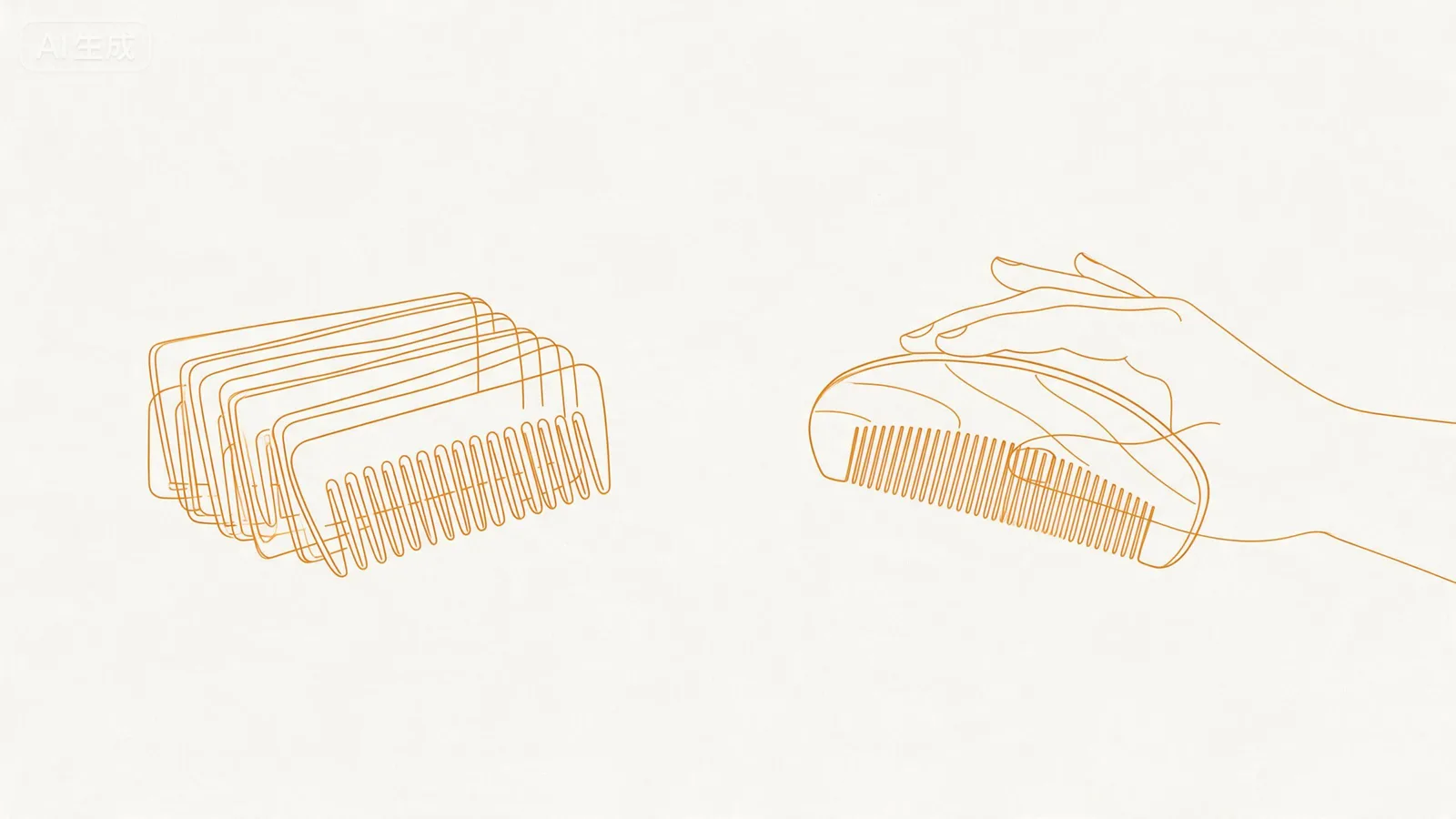
And then there is the other industry under the same English word. Changzhou has made combs and fine-toothed biji for 1,500 years; in the Qing dynasty the city's west and south gates were famously "household after household" of comb-making. Today Changzhou's comb factory is the only licensed one left in the city, listed as national intangible cultural heritage in 2008 with four inheritors. The biji are still hand-made, 72 steps, at least one full day for a high-grade piece. Of roughly 80 workers, only about 10% still make them — the oldest in his seventies, the youngest in his forties. The official phrase for it is "combs without biji": the craft is losing the half that took the skill.
What buyers get wrong on the first email
Three things, repeatedly. One, the invoice: published stall prices exclude tax, and one Anhui mill goes further and states that its prices exclude packaging and tax, with freight paid by the buyer. Two, the colour: a colour change usually means another 1,000 pieces. Three, the import classification — this category enters the US under HTS 9603.29.80, which covers toothbrushes, shaving brushes, hair brushes and similar personal grooming brushes valued over 40 cents each.
Frequently asked
What we would check before you pay anyone
This is the part of the job we spend most of our time on, and it is rarely the price itself.
Whether a mould already exists for your shape, so the US$4,200 does not get charged twice for the same comb. What each of the five cost blocks contains, so the quotes can be compared at all. Whether the number you were given includes tax, packaging and freight. What the line looks like before the bulk run, not after. And whether the factory can actually take your quantity, because a 200-piece order and a 5,000-piece order do not go to the same place.
Two things this page does not have, and we are not going to invent them: the landed cost of a container of combs to your city, which has to be quoted case by case, and a verified map from Amazon listings back to the factory that made them. Nobody publishes that, including us.
- Yiwu stall prices (¥0.44 / ¥0.43 / ¥0.42, excluding invoicing) — yiwugo.com product page, read in full. Sourced 2026-10-01 · verified
- MOQ 1,000, tooling from ~US$4,200, 1,000→5,000 unit price −10%, the five cost blocks — haircarecn.com cost guide (Guangdong OEM parameters). Sourced 2026-10-01 · verified
- Changzhou combs and biji: 1,500 years, 72 steps, one full day per high-grade piece, ~80 workers with ~10% on biji, oldest in his 70s and youngest in his 40s, "combs without biji" — China Intangible Cultural Heritage site. Sourced 2026-10-01 · verified
- Ningbo / Yangzhou / Guangzhou / hotel bamboo / horn comb prices, boar bristle US$0.10–0.99 at 500 kg, sandalwood timber tiers, HTS 9603.29.80 — supplier listings and timber-market pages seen in search results; the underlying pages could not be opened in full. Marked "not independently verified" above
- Amazon retail prices ($6.10 / $8 / $14.99) and review counts — Amazon product pages as shown in search results. Not verified line-by-line
- Market-size figures for this category were left out: the report page did not state the number in its visible text, so it does not belong on this page.
- Nothing here is taken from another sourcing agency's article. No figure is estimated or inferred.
Making a comb, a brush, or something else entirely? Tell us the product and the quantity and we'll tell you which factories will actually take the order — and what they get wrong.
WhatsApp · Leon001@nichenexusglobal.com
Send a photo, a target price and a quantity. We answer with the factories that can make it, what each of them charges for, and where the cost actually sits.